A historic milestone that elevates web accessibility from a “recommendation” to a global legal requirement. Discover what this change means for your business and the digital future.
The past October 2025 marked a decisive turning point for the digital world. The W3C’s Web Content Accessibility Guidelines (WCAG) 2.2 have been approved as an ISO/IEC 40500:2025 International Standard.
Although version WCAG 2.0 was already recognized as ISO/IEC 40500:2012 over a decade ago, the ratification of the latest version, 2.2, solidifies the evolution and importance of these guidelines. It is a clear statement that accessibility is no longer an extra, but a fundamental requirement for quality and legality in information technology.
🌐 What Does the ISO Seal Imply? From Recommendation to Global Law
The International Organization for Standardization (ISO) is responsible for creating universal rules to ensure that products, services, and systems function consistently and predictably worldwide.
Formal Recognition: Moving from a W3C “Recommendation” to an “ISO Standard” grants WCAG an authority and recognition that transcends the boundaries of the web.
Facilitates Legislation: Many countries and public procurement bodies can only formally adopt documents that are ISO standards into their laws and regulatory frameworks. This change opens the door for a growing number of nations and regions to convert the accessibility guidelines into mandatory requirements with legal weight.
International Harmonization: As a universal standard, it promotes the alignment and harmonization of web accessibility laws in different countries, making it easier for global businesses to achieve compliance.
In short: The ISO certification turns WCAG 2.2 into an internationally recognized technical standard, paving the way for accessibility to be a legal obligation and not just a best practice.
💡 Who Benefits from WCAG 2.2 and its New Status?
WCAG 2.2 builds upon previous versions (2.0 and 2.1), including 9 new Success Criteria that enhance accessibility, especially for users with:
Cognitive and Learning disabilities.
Low vision and disabilities on Mobile devices.
By becoming an ISO standard, the impact of these guidelines is maximized, benefiting:
People with Disabilities (PwD): It ensures they can effectively access and operate web content, promoting digital inclusion.
Governments and Public Bodies: It provides them with a solid, recognized foundation to establish their procurement policies and legal accessibility requirements.
Businesses: It offers a clear reference framework and a globally recognized quality seal for building and maintaining websites that comply with the law and reach a broader audience.
At Inclusif, we celebrate this achievement. Elevating WCAG 2.2 to an ISO standard is a monumental step toward a truly universal Internet. It is the perfect time for your organization to not only comply but to lead the way toward digital inclusion.
Learn about the main regulations governing digital accessibility in the public and private sectors on both sides of the Atlantic
Web Accessibility Regulations in Europe and Latin America: What You Need to Know
Web accessibility is not just an ethical matter or a user experience concern — it is also regulated by law in many countries. Both in Europe and Latin America, legal frameworks have been established that require public — and in some cases private — websites to be accessible to all people, including those with disabilities.
In this article, we explain the current accessibility regulations in each region and what you need to consider to ensure your website meets legal requirements.
What Is Web Accessibility, and Why Is It Regulated?
Web accessibility refers to the design and development of websites, tools, and digital technologies in a way that everyone can use them, regardless of physical, cognitive, sensory, or technological limitations.
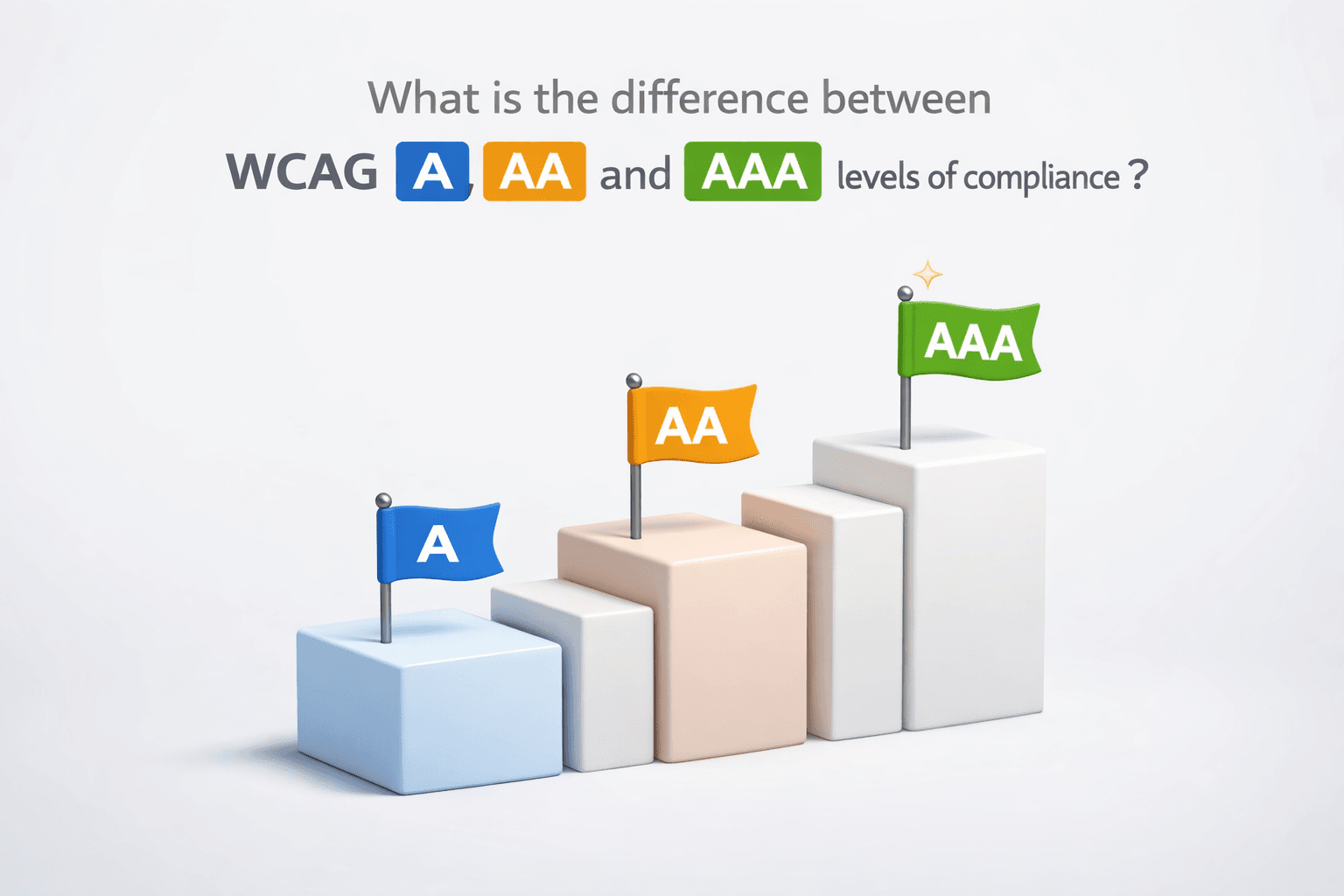
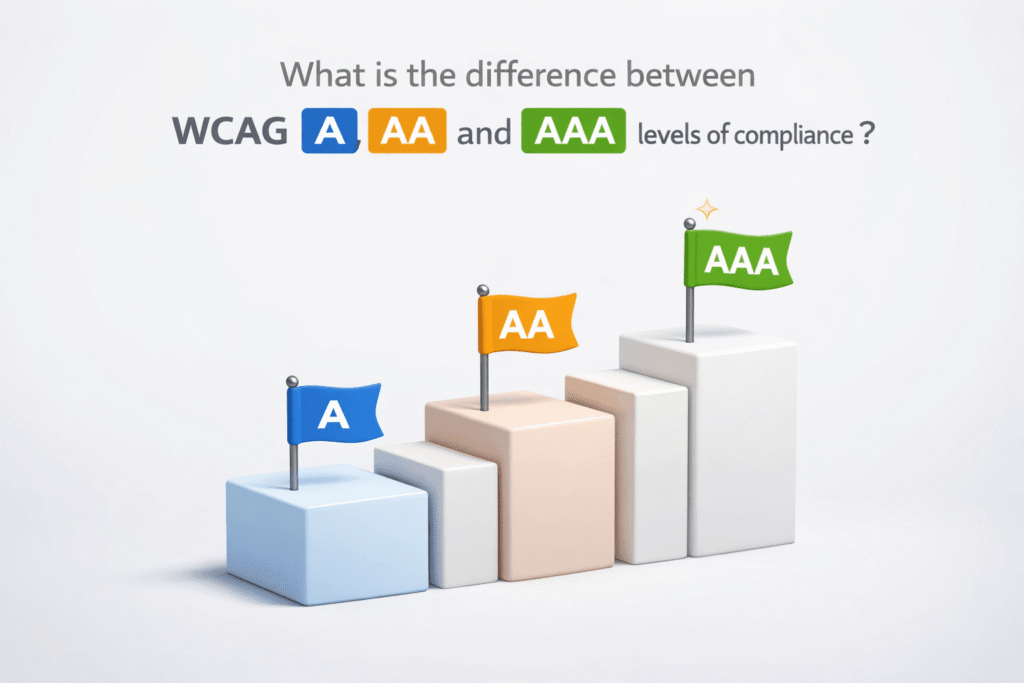
These regulations aim to guarantee the right to access information and eliminate digital barriers. They are usually based on the WCAG (Web Content Accessibility Guidelines), a set of international standards developed by the World Wide Web Consortium (W3C). These guidelines define three levels of compliance: A, AA, and AAA.
Web Accessibility Legislation in Europe
In the European Union, the legal framework is primarily based on:
🟦 Directive (EU) 2016/2102
Applies to: Websites and mobile applications of public sector bodies
Mandatory since: September 2020
Requirements: Compliance with WCAG 2.1 Level AA
Transparency: Public authorities must publish an accessibility statement that is visible to users
🟨 European Accessibility Act (2019)
Effective from: June 2025
Covers: Digital services such as e-commerce, e-readers, online banking, payment terminals, etc.
Affects: Private companies offering essential services to the public
Objective: To harmonize accessibility requirements across the EU and encourage accessible innovation
Countries such as Spain, France, and Germany have incorporated these regulations into national law with specific legislation, including penalties for non-compliance.
Web Accessibility Regulations in Latin America
Although legal progress has been more uneven than in Europe, many Latin American countries have begun to legislate digital accessibility, especially in the public sector.
Mexico
Regulations: NOM-151 and the General Law for the Inclusion of Persons with Disabilities
Official recommendation: Compliance with WCAG 2.0 or 2.1
Applies to: Primarily government and educational websites
Chile
Law: Law 20.422 and Supreme Decree No. 100
Requires: Public websites to be accessible and meet international standards (WCAG)
Law 1346 of 2009 (ratification of the UN Convention)
Guidelines: Based on WCAG
Application: Mandatory for state entities and recommended for the private sector
Argentina
Regulations: Law 26.653 on Accessibility of Information on Web Pages
Responsible agency: National Disability Agency
Requirement: Mandatory compliance for government websites
Brazil
Laws: Decree 5.296 and Brazilian Inclusion Law (Law 13.146)
Guidelines: Based on WCAG 2.0
Applies to: Requires accessibility for government websites and recommends best practices for private companies
How Can You Comply with Accessibility Laws?
If your website operates in any of these regions — or if you simply want to improve digital inclusion — here’s a list of practical actions you can take:
✅ Evaluate your website using both automatic and manual accessibility tools
✅ Apply WCAG 2.2 Level AA guidelines as a minimum
✅ Include an accessibility statement on your site
✅ Ensure keyboard and screen reader navigation is possible
✅ Make sure all forms are accessible
✅ Provide text alternatives for images, audio, and video content
Remember: Meeting legal standards not only helps you avoid penalties — it also enhances the experience for all users and boosts your search engine rankings.
Conclusion
Digital accessibility is no longer optional: it’s backed by legislation, demanded by users, and valued by search engines. Understanding and applying the regulations in your country not only prevents fines but also enhances your brand reputation and reach.
At Inclusif, we help you identify the legal requirements that apply to your site and support you throughout the technical and strategic compliance process. Not sure where to start? Let’s talk — we’ll guide you step by step.
Learn the main differences between each level of compliance.
The Web Content Accessibility Guidelines (WCAG), developed by the W3C, provide a framework for creating Web pages that are accessible to all people, including those with disabilities. These standards are organized into three levels of conformance, from most basic to most comprehensive: A, AA and AAA.
🟢 Level A (Minimum Conformance)
This level establishes the essential requirements for a site to be accessible:
Mandatory use of alternative text (alt) on all images.
Provision of descriptive transcripts for prerecorded audio or video media.
Correct use of structured headers.
Inclusion of ARIA tags in key places.
Avoid elements such as \ or \ for interactive features; instead, use semantic elements such as \ or \.
Content should be presented in a coherent and meaningful way.
Do not rely exclusively on color, shape, size, or sound to convey information.
Avoid automatic media playback without user control.
Allow full keyboard navigation.
Ability to pause, stop or hide animated content.
Avoid content that flashes more than 3 times per second.
Do not include irrelevant or misleading links.
Correctly label form fields, using visible labels or ARIA attributes.
This level provides a solid foundation for accessibility, eliminating common barriers.
🔵 Level AA (Recommended)
In addition to complying with level A, this includes enhancements focused on user experience:
Closed captioning for live content, and video narration.
Content must be accessible in both landscape and portrait mode on mobile devices.
Color contrast should be at least 4.5:1 for normal text and 3:1 for large text or graphic elements.
When focusing or hovering over elements, they should appear without overlapping others.
The site should include a clear navigational structure, such as a site map, table of contents, or related links.
Each page should have unique titles and descriptive labels.
Keyboard focus should be highly visible and consistent.
Repeating elements should maintain a consistent order.
To convey status messages, ARIA live regions should be used.
Forms should have clear labels, and navigation should be simple.
AA level is the primary goal of many organizations and also the legal standard in several countries.
🔴 Level AAA (High Accessibility)
Includes all of the above requirements and adds even more stringent criteria:
Streaming media must include sign language interpretation and accurate audio description.
Avoidance of unnecessary background sound is recommended.
The contrast between text and background should be at least 7:1.
Links should be clear in themselves, without relying on context.
Headings should clearly describe the structure and content of the page.
All interaction should be keyboard-only.
Include tools to change the color or increase the size of the text.
Abbreviations, idioms and technical terms should be explained with a glossary or contextual help.
Avoid any content with flickering or flashing.
No time limits should be imposed on the use of the site.
The text should be at an accessible reading level, avoiding unnecessary technicalities.
This level is ideal for projects seeking impeccable accessibility, although it can be complicated to implement on large or existing sites.
🤔 Why are these levels important?
They improve the experience for all users, not just those with disabilities.
They strengthen SEO, as they are desirable to search engines.
They increase retention and conversion by being more understandable and easier to use.
Reduce legal risks, since many regulations require at least AA level.
Conclusion
Achieving at least AA is a solid and strategic goal for most projects. Meeting AAA, while admirable, is often feasible in new phases or sites designed from the ground up with inclusion as a focus.
At Inclusif, we help companies, developers and designers audit, correct and certify their websites to WCAG standards. With our practical and human approach, we turn accessibility from a technical task into a competitive advantage.
👉 Contact us today and find out how we can help you achieve a truly accessible website.
Web accessibility is not just an ethical issue, but a legal obligation. This was recently reminded by the National Court, which confirmed a €90,000 fine to the airline Vueling for not complying with current digital accessibility regulations.
What exactly happened?
Vueling Airlines, S.A. was sanctioned by the Ministry of Social Rights and Agenda 2030 after detecting significant accessibility deficiencies on its official website.
📅 The resolution, dated October 9, 2020, was ratified in 2024 by the National Court, which dismissed the appeal filed by the airline.
What was the reason for the sanction?
The legal basis is Royal Legislative Decree 1/2013, which in its article 95.3.e) classifies as a serious infraction:
“El incumplimiento […] de las normas sobre accesibilidad de los entornos, instrumentos, equipos y tecnologías, […] que obstaculice o limite su acceso o utilización regulares por las personas con discapacidad.”
En este caso, se comprobó que la web de Vueling no cumplía con los estándares exigidos, afectando directamente a la experiencia de personas con discapacidad.
¿Qué estándar se exige en España?
Las empresas que prestan servicios al público general deben cumplir, como mínimo, con el nivel AA de accesibilidad web, tal y como establece:
📜 Ley 34/2002 de Servicios de la Sociedad de la Información (LSSI)
🏷 Norma UNE 139803:2012, que adapta las pautas WCAG 2.0 al contexto español
🏛 Real Decreto 1494/2007, que fija las condiciones básicas de accesibilidad digital
📊 El informe técnico: solo el 10% de cumplimiento
The report prepared by CENTAC (National Center for Accessibility Technologies) revealed a very low degree of compliance:
✅ 4 out of 38 criteria (10.53%) were fully met ❌ 26 criteria (68.42%) were not met ⚪ 8 did not apply
🔍 Among the most frequent violations
🖼 Images without alternative text
📝 Forms without accessible labels
⌨️ Lack of keyboard navigation
🎨 Insufficient color contrasts
🎥 Videos without subtitles
🏗 Incorrect heading structure
⚠️ Dynamic elements not labeled
📄 Multimedia content without textual alternatives
💰 What sanction did Vueling receive?
💵 Fine of €90,000
🚫 Prohibition from applying for public subsidies for 6 months
📌 The resolution also took into account that Vueling was already warned in 2016, and instead of improving, the degree of compliance remained very low years later.
What did Vueling allege in its defense?
The company tried to invalidate the sanction by alleging:
❓ Lack of regulatory clarity (use of a “subsequent” standard like UNE 2012)
⚖️ Excessive proportionality in the fine
🤝 That there was no intentionality, but good faith
📌 However, the National Court dismissed all arguments, emphasizing that accessibility is not optional, and that standards are clearly and legally defined.
🏢 What does this mean for companies?
Web accessibility is mandatory for all companies that offer services to the general public and have economic relevance, such as: ✈️ airlines | 🏦 banks | 📱 telecommunications | 🛡 insurance
⚠️ Failing to comply can result in fines of up to €1 million, especially if recidivism is detected or many users are affected.
✅ How to avoid web accessibility sanctions?
If you have a corporate website or digital services platform, these are the minimum recommended steps:
🔍 Accessibility audit by specialized professionals
🛠 Technical correction of all detected errors
🎓 Continuous training for development and content teams
🏢 ¿Qué implica esto para las empresas?
La accesibilidad web es obligatoria para todas las empresas que ofrecen servicios al público en general y tienen relevancia económica, como: ✈️ aerolíneas | 🏦 bancos | 📱 telecomunicaciones | 🛡 seguros
⚠️ No cumplirla puede conllevar sanciones de hasta 1 millón de euros, especialmente si se detecta reincidencia o se afectan a muchos usuarios.
✅ ¿Cómo evitar sanciones por accesibilidad web?
Si tienes una web corporativa o una plataforma de servicios digitales, estos son los pasos mínimos recomendables:
🔍 Auditoría de accesibilidad por profesionales especializados
🛠 Corrección técnica de todos los errores detectados
🎓 Formación continua del equipo de desarrollo y contenido
🔄 Mantenimiento periódico para cumplir con actualizaciones normativas
Conclusión
El caso Vueling marca un antes y un después. Es una señal clara de que la accesibilidad digital ha dejado de ser un “plus” para convertirse en una exigencia legal.
🌍 En una sociedad cada vez más digital, no podemos permitirnos dejar fuera a millones de personas. Ni moralmente, ni legalmente.
🚀 Haz tu web accesible hoy con Inclusif
Avoid sanctions, improve your users’ experience and comply with current regulations. At Inclusif we help you to:
✅ Audit your website with automated analysis and manual reviews ✅ Correct accessibility errors without complications ✅ Train your team to maintain accessibility over time ✅ Show your commitment to digital inclusion
📌 Comply with UNE 139803:2012 and WCAG 2.2.
Remember: Accessibility is not optional, it’s an investment in your brand and your customers.
Find out what EN 301 549 requires, how it relates to WCAG and the European Accessibility Act, and what steps you need to take to ensure compliance before June 2025.
EN 301 549: The European Accessibility Standard 🌍♿
The EN 301 549 standard sets accessibility requirements for information and communication technology (ICT) products and services — including hardware, software, documents, and mobile applications — used in Europe. Originally designed for public procurement, it is now part of the European Accessibility Act (EAA). ✅📱💻
To comply, EU Member States must:
📄 Handle and respond to accessibility-related requests concerning websites and mobile apps, in accordance with applicable national regulations.
🎓 Offer targeted training programs on digital accessibility and legal obligations.
📢 Actively promote awareness and commitment to accessibility at all levels of the organization.
💡 Share and apply best practices to ensure websites and mobile apps are genuinely accessible.
🛠️ Ensure there is an effective enforcement procedure for accessibility obligations.
What Does EN 301 549 Cover? 🔍
Aligned with the WCAG, this standard goes beyond web content: it also includes requirements for hardware, applications, documents, and telecommunications. As a harmonized European standard, compliance is presumed to meet legal obligations.
Key Details of Version v3.2.1 (Harmonized in February 2022) 📅
📝 Public sector must publish an accessibility statement indicating the current level of accessibility, non-accessible elements, and complaint procedures.
🧭 There must be an explanation of inaccessible elements, and information on available alternatives.
Expected Changes in Version v4.1.1 (March–May 2025) 🔄
🆕 Adoption of WCAG 2.2, with additional criteria to support users with cognitive disabilities.
🗣️ Inclusion of real-time text (RTT) in communications — helpful for people with hearing or speech disabilities.
🤝 Full alignment with the EAA, effective June 2025, making legal compliance easier.
Is Complying with EN 301 549 the Same as Following WCAG 2.2? 🤔
Largely, yes ✅ — but there are some differences.
For instance, EN 301 549 addresses the use of biometric data. If an organization uses biometric systems, it must follow specific rules to comply with this standard.
Why Is EN 301 549 Important for European Organizations and Businesses? 🇪🇺🏢
⚖️ Legal compliance: As of June 2025, it is mandatory in the EU for public organizations — non-compliance may lead to penalties.
🌍 Access to new markets: An estimated 135 million people with disabilities in Europe represent a significant market opportunity.
🌟 Social responsibility and reputation: Demonstrates a commitment to inclusion and enhances corporate image.
How to Prepare Before June 2025? 🧭📆
🔍 Conduct comprehensive audits that include WCAG 2.2 and specific EN 301 549 requirements.
⚙️ Update technical platforms, including PDFs, user interfaces, and telecommunications systems.
👥 Train internal teams — designers, developers, content creators — on new criteria like RTT and WCAG 2.2.
📊 Ongoing monitoring, as standards will continue to evolve.
Conclusion ✅
EN 301 549 is a cornerstone of digital accessibility in Europe. With version v4.1.1, organizations must adapt to new requirements (such as WCAG 2.2) and prepare for mandatory EAA compliance by June 2025. 🗓️♿
At Inclusif, we help you meet EN 301 549 through technical audits, custom consulting, team training, and continuous support.
If you need help adapting your website, app, or digital documentation, visit inclusif.life and discover how we can support your journey toward real, sustainable accessibility.
The European Union and Spain are jointly promoting digital accessibility: as of June 28, 2025, websites must be accessible by law.
📅 As of June 28, 2025, web accessibility ceases to be optional and becomes an unavoidable legal requirement in Spain. On that date, the sanctioning regime of accessibility regulations comes into force, which means that websites – both public and many private – may be fined if they do not comply with accessibility requirements.
This initiative is part of the European effort to ensure the digital inclusion of more than 100 million people with disabilities in the EU, marking a before and after in the digital landscape.
📖 In this article we explain which laws apply, what specific obligations you have as the person responsible for a website or e-commerce in Spain, what the penalties are for non-compliance, and how Inclusif can help you comply with the regulations.
🧭 Web accessibility regulations: from the public to the private sector
In Spain, web accessibility has been regulated for years, especially in the public sector. The pioneering Law 11/2007 already obliged public administrations to offer digital services accessible to citizens. This was followed by Royal Decree 1112/2018, which transposes Directive (EU) 2016/2102 📜 and establishes detailed accessibility requirements for all public sector websites and mobile apps.
According to this Royal Decree, all public bodies (ministries, city councils, universities, hospitals, etc.) must ensure that their portals are “perceivable, operable, understandable and robust” for any user, complying with the European standard UNE-EN 301549 (equivalent to the WCAG 2.1 level AA guidelines). In addition, it is required to publish and keep updated an Accessibility Statement detailing the level of compliance of the site, and to enable a communication channel for users to report barriers or request accessible information.
These obligations ensure that accessibility is integrated into the design, maintenance, and updates of public portals.
Until now, in the private sector, web accessibility did not have such a strict sanctioning mechanism, although there were standards and recommendations. However, this changes radically as of June 2025. Directive (EU) 2019/882, known as the European Accessibility Act (EAA), extends accessibility requirements to numerous private products and services across the European Union.
📌 Spain has transposed this directive through Law 11/2023, which establishes legal accessibility obligations for companies in various sectors and introduces a penalty regime for non-compliance. Specifically, from June 28, 2025, medium and large private companies will have to ensure that their websites and apps comply with accessibility standards just as the public sector does.
For the first time, European legislation imposes concrete requirements on the private sector in this area with real and significant penalties for non-compliance. The aim is to standardize digital accessibility across the EU and ensure that no one is excluded by web barriers.
🕵️♀️ Which websites must comply with accessibility laws?
All public sector websites (portals of state administrations, autonomous communities, local entities, public health services, education, justice, etc.) are obliged to be accessible, without exception. This includes electronic offices, information pages, online procedures and official mobile applications.
These entities should already have been WCAG 2.1 AA compliant for a few years now, given that the Royal Decree 1112/2018 deadlines for public websites and apps have already passed (2019-2020 for existing websites and 2021 for apps). If you manage a public portal, accessibility is not new to you, although it is advisable to periodically review the status of your website to ensure continued compliance and update the Accessibility Statement annually.
As for the private sector, the new accessibility law affects most medium and large companies that offer services to the public. In particular, they will be required to comply:
E-commerce sites: Online stores of goods or services must be accessible to the public with disabilities. Even small businesses engaged in e-commerce fall under the scope: if you have less than 10 employees or turnover \< €2 million but sell online, you are not exempt. The EAA considers e-commerce a “key sector” where even micro-enterprises must ensure accessibility.
Banking and financial services: Online banking platforms, financial applications, ATMs with web interface, etc., must be usable by people with sensory or motor disabilities.
✈️ Transportation and tourism: Pages and apps for purchasing air, train, subway tickets; travel booking portals, hotels, etc., must meet accessibility requirements, facilitating for example booking by blind users or users with reduced mobility.
📡 Telecommunications: Websites of telephone and Internet operators, and customer service applications, have to be accessible.
🔌 Energy, water, and utilities sectors: Portals of electricity, gas, water, or other essential services companies are also included under the umbrella of mandatory accessibility (according to previous Spanish regulations).
🎓 Digital education and multimedia content: Private online education platforms, digital libraries, e-book services and players must ensure accessible content (e.g., e-books with screen reader compatibility).
In summary, sectors such as public administration, education, transportation, e-commerce, banking, telecommunications, among others, are clearly within the scope of the regulations.
Medium and large companies must be prepared to comply fully, while microcompanies are generally exempt only if they do not operate in these key sectors.
However, even if your company is not formally obliged, embracing accessibility brings competitive and reputational advantages: it broadens your potential customer base (there are more than 4 million people with disabilities in Spain) and improves the experience of all users. In fact, it has been observed that implementing accessibility guidelines can increase conversion rates by up to 15% in e-commerce by improving overall usability. In other words, what’s good for accessibility is usually good for business.
📋 Key obligations: what does the law require of your website?
✅ 1. Comply with the technical standard WCAG 2.1 AA (or UNE-EN 301549) — The basis of the regulation is that your website should be perceptible, operable, understandable, and robust for everyone.
In practice, this means following the WCAG 2.1 AA guidelines, which cover numerous concrete measures: for example, providing alternative texts for images (so that blind users with screen readers understand the content), adding subtitles or transcripts to videos and multimedia for deaf people, ensuring adequate color contrast in text and buttons for those with low vision, and designing navigation that is usable with a keyboard (essential for people with reduced mobility who do not use a mouse).
It is also necessary to avoid content that could provoke convulsions (e.g., animations that flicker rapidly, thinking of users with photosensitive epilepsy) and to offer aids to focus attention (e.g., a highlight on the active element for those who navigate using a keyboard). In short, your site must be technically accessible: from the code (semantic HTML, ARIA tags where appropriate) to the visual design and texts, all conforming to international web accessibility standards.
📄 2. Accessible content and documentation — The obligation does not end with the web interface itself, but also encompasses the documents or information you provide. If you provide PDF files, downloadable forms, contracts, terms of service, product manuals, etc. on your site, these must also be accessible (e.g., PDFs correctly labeled for screen reading). Likewise, if you offer alternative content for certain users (such as “easy-to-read” versions for people with cognitive disabilities, or sign language for audiovisual content), you must keep it up to date. Accessibility should be integrated into all formats in which you distribute digital information.
🧾 3. Accessibility statement and feedback mechanisms (on public sites) — If you manage a government or public agency website, it is mandatory to include a public and updated Accessibility Statement.
In this document (usually linked in the footer of the portal), the degree of compliance of the site with the regulations, the non-accessible areas and why, and the communication options for citizens are reported. In addition, you must provide a way for any user to report accessibility problems or request content in accessible format. Typically, this is a contact form or a specific accessibility email address.
The entity is obliged to respond to these communications within a certain period of time. If the user does not get a response or is not satisfied, he or she can escalate a complaint to a supervisory body (in Spain, a monitoring body was designated at ministerial level to handle these complaints). This process ensures that there is effective enforcement in the public sector, even if there are no direct fines between administrations, the pressure to correct the reported barriers is high. In the case of private websites, the accessibility law does not explicitly require the publication of a similar statement (except perhaps in regulated sectors), but it is highly recommended for transparency. Some companies will opt for accessibility certifications or for displaying an accessibility seal.
🔄 4. Accessibility maintenance and upgrades – Compliance is not a one-time effort, but an ongoing commitment. Regulations (especially for the public sector) require periodic reviews and reporting on accessibility status.
No excuses can be made for “our website was compliant in 2020 but we haven’t touched it since”; a constant effort to update is expected. Important: lack of technical knowledge, budget or priority are not considered valid reasons for non-compliance.
The law provides only very limited exceptions for disproportionate burden, but these must be justified and temporary. In other words, all organizations should plan and allocate resources for Web accessibility within their normal operations.
💣 Fines and risks of non-compliance
What happens if my website is not accessible from June 2025? A robust penalty regime will come into play in Spain. Companies or entities that fail to comply with accessibility obligations are exposed to significant financial penalties, the amount of which varies according to the seriousness of the infringement. Specifically, the law provides for fines of up to €90,000 for serious infringements, which can rise to up to €1,000,000 for very serious infringements.
These amounts place accessibility at the same level of importance as other mandatory regulations. For example, a commercial website with significant barriers on a large percentage of its pages could be fined tens of thousands of euros, and extreme cases of deliberate or repeated non-compliance could result in fines in the millions of euros.
But the consequences are not limited to the fine. The legislation provides for additional measures to force compliance. Authorities could, for example, suspend or revoke public subsidies and grants awarded to an organization that does not comply with accessibility.
Imagine a company that receives public funds or subsidies: failing to comply with accessibility standards could cost it the loss of that financial support. There is also a risk of exclusion from public tenders and contracts: entities that do not have their websites accessible may be disqualified from contracting with the Administration until the deficiencies are solved, since accessibility is an increasingly valued criterion in public procurement (and in many cases, a mandatory requirement in specifications). At the European level, the Accessibility Act even contemplates the possible prohibition of marketing non-accessible products or services.
This means that, for example, a mobile application or digital platform that is not adapted to users with disabilities could be withdrawn from the market until it is corrected. Similar (or harsher) sanctions will be seen in other EU countries, so multinational companies will have to comply in all markets to avoid facing legal problems.
Beyond the legal sanctions, not complying with accessibility entails reputational and market risks. A notorious case was the€90,000 fine imposed on the airline Vueling for having its website with 70% of accessibility requirements not complied with.
This type of news affects the public image: companies that do not address inclusion may be perceived as irresponsible or discriminatory. On the contrary, those that do comply can publicize it and improve their corporate social responsibility. In addition, an inaccessible website may face user complaints and lawsuits for discrimination under the General Disability Law. To date many organizations had treated accessibility as something voluntary without major consequences, but from now on non-compliance will have legal “teeth” and you will suffer the consequences if you do not act.
Summary:
😬 If your website is not accessible from June 2025:
Fines of up to €90,000 (serious infringements) 💶
Up to €1,000,000 in very serious cases 💥
Risk of losing public subsidies 💔
Possible exclusion from tenders ❌
In the EU: ban on marketing non-accessible digital products.
👎 In addition to the economic:
Legal risks (discrimination lawsuits) ⚖️
Loss of reputation and public trust 🗞️
Example: Vueling was fined 90,000 € for 70% of barriers on its website ✈️
The conclusion is clear: it is much more profitable to invest proactively in adapting your website than to risk fines, financial losses and brand damage later on.
🎯 Conclusions: Toward an inclusive, sanction-free website (act now!)
The entry into force of the new sanctioning regime on June 28, 2025, is a wake-up call for all web professionals and companies: accessibility is non-negotiable; it is now a legal obligation that carries with it severe fines and penalties for those who ignore it. But beyond avoiding sanctions, adopting accessibility is a commitment to quality, innovation, and social responsibility. It means offering a better user experience for everyone, expanding your market reach, and positioning your brand as a leader in inclusion.
The good news is that you still have time to get up to speed. Review your site, identify barriers (ideally with a professional audit), train your team in good accessibility practices, and take advantage of solutions that make things easier. Inclusif can be your greatest ally in implementing all the improvements you need to make your website accessible. Don’t wait to receive a complaint or, worse, a fine: get ahead of it and take action today. Make your website compliant and provide an inclusive welcome to all your users.
🚀 Inclusif can help you:
Audit your site
Train your team
Implement improvements
Show your commitment
The next step? We invite you to try Inclusif on your own website and discover how easy it is to transform your site into an accessible space for everyone. 🎁
Start building a barrier-free website now – your audience will thank you, and so will your business. Don’t let June 28, 2025, catch you off guard!
Discover the legal obligations, penalties, and key dates that every organization needs to know to ensure digital accessibility in France.
Digital Accessibility in France: A Clear Vision
Salut! 🌍 In France, digital accessibility is no longer just a good practice—it’s a legal obligation! Let’s discover how.
In France, digital accessibility has stopped being an option to become a legal and social imperative. With more adults with disabilities registered each, ensuring that everyone can access online information is a national priority. This is where RGAA (Référentiel Général d’Accessibilité pour les Administrations) comes in—the framework that defines the rules of the game.
What is RGAA and who does it apply to?
RGAA is the French technical standard that translates WCAG 2.2 (Web Content Accessibility Guidelines) and the European standard EN 301 549 into verifiable requirements. Its objective is clear: that digital public services (websites, apps, intranets, software) be accessible to everyone, including people with disabilities, older adults, or any user with temporary barriers.
Its legal basis? Article 47 of Law No. 2005-102 (Law for Equal Rights and Opportunities), updated in 2023. It applies mandatorily to:
Public organizations and administrations
Private companies with average annual revenue > 250 million euros (averaged over 3 years)
Although SMEs are not explicitly required to comply, RGAA serves as a guide for best practices to avoid legal risks and expand their market reach.
What Article 47 requires (Update 2023)
Mandatory Accessibility Statement: Must be published on the homepage, detailing the level of compliance and pending areas.
Multi-year Action Plan: Public document with deadlines for correcting barriers and maintaining accessibility.
Staff Training: Accessibility training for teams that develop or manage digital services.
Broad Coverage: Applies to all online public communication services (with very limited exceptions, such as non-essential archive content).
“Disproportionate Burden”: Organizations can claim it, but it must be justified according to strict criteria defined by decree.
Risks of non-compliance: Beyond fines Inaccessibility has tangible consequences
Lawsuits: Any affected person can claim compensation
Reputational Damage: After a complaint, the entity has 6 months to correct. If it persists, it’s officially declared “non-compliant”
Loss of Audience: You exclude millions of potential users
7 Key measures to avoid risks and become RGAA-Compliant
Regular Audits: Identify gaps with tools and real user testing
Alternative Text (alt text): Add alternative text to all informative images. This way, accessibility assistance tools can aid users to understand the images.
Subtitles and Transcriptions: In videos and audio, in order to help deaf users.
Color Contrast: With a minimum 4.5:1 for normal text (necessary to accomplish AA)
Keyboard Navigation: Implement complete functionality without mouse, so users can navigate the web by only using the keyboard.
Forms and Buttons: Properly labeled and accessible. With this, accessibility assistance tools can help the users to navigate in a satisfactory way.
Flexibility: Allow text size adjustment without losing functionality. You can allow this by using a web component, such as the one Inclusif offers.
Conclusion: Accessibility is an opportunity
RGAA is not just a French legal requirement; it’s a gateway to innovation and real inclusion. Organizations that adopt it not only avoid sanctions but demonstrate social commitment, improve their user experience, and reach a broader market.
Ready to transform your digital presence in France? At Inclusif, we accompany you with audits, specialized training, and technical solutions so your organization not only complies but stands out for being truly inclusive.